

Introduction
Most people with IT band syndrome — the sharp, burning pain on the outside of the knee that shows up around kilometre four and refuses to leave — are told the same thing: rest, ice, stretch. And for a lot of them, it works. For a while. Then they start running again, and somewhere between the warm-up and the first long downhill, it’s back.
Here’s what I want to address in this post. IT band syndrome treatment isn’t complicated — but most approaches are incomplete. They deal with the pain without asking why the IT band was overloaded in the first place. This post covers what actually works, what the evidence supports, and — most importantly — what changes the pattern long-term.
Get Your Physiotherapy Treatment Today
Understand your condition better with our detailed physiotherapy assessment, and return to normal life pain-free by addressing your root cause.
Click the button below to book an appointment now!
Treated over 1,000 patients. 30% off first visit
What Is the IT Band and What Goes Wrong?
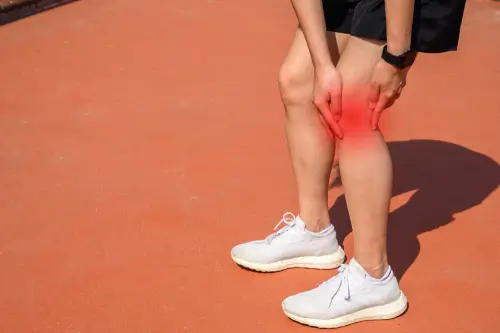
Where the IT band runs and what it does
The iliotibial band, or IT band, is a thick strip of connective tissue that runs along the outside of your thigh, from the top of your pelvis all the way down to the outer edge of your shinbone, just below the knee. It’s not a muscle. You can’t strengthen it directly, and (spoiler for later) you can’t meaningfully stretch it either.
Its job is to help stabilise the hip and knee when you walk, run, or change direction. Two muscles attach into it — the tensor fasciae latae (TFL), a small muscle at the front of the hip, and the gluteus maximus, the largest muscle in your body. When those muscles are working well and in balance, the IT band does its job quietly in the background.
When they’re not, it becomes the loudest structure in the room.
Why the IT band gets irritated in the first place
Iliotibial band syndrome (ITBS) — sometimes called IT band friction syndrome — happens when the IT band gets repeatedly compressed or irritated as it passes over a bony prominence on the outside of the knee called the lateral femoral condyle (the outer edge of the bottom of your thighbone). Every time you bend and straighten your knee, the IT band moves across this point. Do that thousands of times on a long run, and eventually the tissues in that area — including a small fluid-filled sac called a bursa, which normally reduces friction — become inflamed and painful.
What triggers this? Training errors are the most common culprit: too much mileage too quickly, too many hills, running on cambered roads, or a sudden jump in weekly volume. But training load alone doesn’t tell the whole story — and we’ll come back to that.
How to Know If You Have IT Band Syndrome
The classic symptoms
The pattern is pretty recognisable once you know what to look for:
- Sharp, burning, or aching pain on the outside of the knee, often just above the joint line
- Pain that starts after a predictable distance into a run — often at the same point each session
- Worse running downhill or on stairs, and when bending the knee repeatedly
- A clicking or snapping sensation on the outer knee in some cases
- Pain that fades with rest, then returns as soon as you start again
In the early stages, it shows up near the end of a run. If left unaddressed, it starts earlier and earlier until running becomes impossible — and eventually walking downstairs becomes uncomfortable too.
What a physio looks for during examination
A clinical examination typically includes the Ober test where you lie on your side and the physio assesses how much tension is present in the IT band by passively moving the leg, and the Noble compression test, where direct pressure is applied to the lateral femoral condyle at 30 degrees of knee flexion. That specific angle is where IT band compression is highest, so reproducing pain there tells us a lot.
We also assess hip strength, movement patterns, foot position, and single-leg stability because the knee is only one part of the picture.
Get Your Physiotherapy Treatment Today
Understand your condition better with our detailed physiotherapy assessment, and return to normal life pain-free by addressing your root cause.
Click the button below to book an appointment now!
Treated over 1,000 patients. 30% off first visit
Do you need a scan?
In most cases, no. Iliotibial band syndrome is a clinical diagnosis — meaning a physio or doctor can identify it through your history and a physical examination alone. An MRI can be useful if the diagnosis is unclear, or to rule out other causes of lateral knee pain like a lateral meniscal tear (a tear in the cartilage cushion inside the knee joint) or a lateral collateral ligament injury (a sprain of the ligament on the outer side of the knee). But chasing a scan when the clinical picture is already clear adds time and cost without changing the treatment plan.
The Root Cause Most People Miss
Here’s what separates people who recover from IT band syndrome and don’t come back with it — versus those who recover, return to running, and find themselves back at square one three months later.
It's rarely just about the IT band
The IT band becomes a problem when it’s being asked to do too much. And it gets asked to do too much when the structures around it — particularly the hip abductors, the muscles responsible for controlling the sideways movement and stability of the hip — aren’t doing their share of the work.
The most important of these is the gluteus medius — a broad, fan-shaped muscle on the side of the hip that keeps your pelvis level when you’re running on one leg (which, if you think about it, is what running actually is). When the glute medius is weak or not firing properly, your hip drops slightly on the opposite side with every stride. That drop increases the tension through the IT band with every single step. Over thousands of repetitions, the IT band gets overloaded — and you get ITBS.
The glute medius problem
This is the pattern we see most consistently in runners with IT band syndrome: strong legs, good mileage base, and a glute medius that has quietly stopped contributing the way it should. Often it shows up as a subtle inward collapse of the knee during single-leg loading, or a visible hip drop when you watch someone run from behind.
And that’s the part most people miss. Treating the IT band itself — icing it, stretching it, foam rolling it — addresses the structure in pain. It doesn’t address the structural deficiency driving the problem.
What this means for your treatment
It means the goal isn’t to reduce IT band pain and send you back to training. The goal is to reduce the pain, identify why the IT band was being overloaded, and fix that. The first part is reasonably straightforward. The second part is where most treatment plans fall short.
IT Band Syndrome Treatment: What the Evidence Actually Supports
Phase 1 — Reducing pain and inflammation
Before you can retrain movement and build strength, you need to create the right environment for that work. That means bringing inflammation down, reducing tissue tension, and giving the area enough of a break from aggravating load to allow it to calm down.
What this looks like in practice:
- Load management — reducing or temporarily modifying running volume (not always stopping completely, but being sensible about what you can do without provoking symptoms)
- Ice — applied for 10–15 minutes after activity, not as a cure but as a way to manage inflammation acutely
- NSAIDs — anti-inflammatory medications like ibuprofen can help with pain management in the short term, taken appropriately
- Manual therapy — myofascial release, soft tissue work around the TFL, hip flexors, and lateral thigh, and dry needling where indicated, can reduce tissue tension and create the conditions where movement retraining becomes possible
Manual therapy is not the end of the plan. It’s the beginning of it. What it does is reduce the noise (the pain and tightness) so that the strengthening work that actually changes the long-term picture can happen properly.
Phase 2 — Rebuilding the structures that protect the IT band
This is the phase that gets skipped, or started too late, or stopped the moment pain disappears. It shouldn’t be any of those things.
Once pain is sufficiently controlled, we begin loading the hip abductors and glute medius progressively. The goal is to get those muscles strong enough to maintain proper hip and pelvis alignment under the specific demands of running, not just in controlled exercises on a mat, but under real load.
This phase takes weeks, not days. The research is clear on this: conservative management that combines load modification, stretching, and strengthening produces a return-to-sport rate of 91.7% at six months, but only 44% at eight weeks. The people who don’t make it to six months are often the ones who stopped when the pain went.
Get Your Physiotherapy Treatment Today
Understand your condition better with our detailed physiotherapy assessment, and return to normal life pain-free by addressing your root cause.
Click the button below to book an appointment now!
Treated over 1,000 patients. 30% off first visit
A note on stretching the IT band
I want to spend a moment on this because it’s one of the most persistent myths in running injury management.
The IT band is not a muscle. It’s a dense band of connective tissue — fascia — with very limited capacity to lengthen in any clinically meaningful way. The research increasingly shows that IT band stretches, on their own, are not an effective treatment for ITBS.
That doesn’t mean stretching has no role. Releasing the TFL, hip flexors, and lateral hip structures — the muscles that feed into the IT band — can be genuinely useful as part of a broader approach. But if your entire treatment plan is “stretch your IT band,” you are treating the wrong thing.
When to consider injections
Corticosteroid injections — anti-inflammatory injections delivered directly to the site of irritation — can be useful in cases where pain is severe enough to prevent progress with rehabilitation. They reduce local inflammation and give a window for the strengthening work to begin. They are not a long-term solution on their own, and the research suggests repeated injections can have adverse effects on tissue quality. They are a tool, not a treatment plan.
When surgery is considered
Surgery for IT band syndrome is rare. It becomes relevant only after conservative management has been tried consistently for at least six months without sufficient improvement. Surgical options include excision of the irritated portion of the IT band or release of the IT band at the lateral femoral condyle. Outcomes are generally good, but the vast majority of patients never need to get there.
IT Band Syndrome Exercises: What We Use at ONI Physio Fitness
The focus here is on the hip abductors and glute medius — the muscles that protect the IT band during loading. These are not glamorous exercises. They don’t look impressive. But they are the exercises that change outcomes.
Important: if your pain is currently acute or severe, get a clinical assessment before starting a strengthening programme. The right exercise at the wrong stage of injury can slow recovery.
Hip abductor strengthening
Clamshells
- Lie on your side with your hips and knees bent at 45 degrees, feet together.
- Keeping your feet touching, lift your top knee toward the ceiling — like a clamshell opening.
- Pause at the top for 2 seconds. Do not let your pelvis roll backward.
- Lower slowly. That’s one rep.
- 3 sets of 15 repetitions. Progress to a resistance band around the thighs when this becomes easy.
Side-lying hip abduction
- Lie on your side with your bottom knee slightly bent for support and your top leg straight.
- Lift the top leg to about 30–40 degrees, keeping your toes pointing forward (not toward the ceiling).
- Hold for 2 seconds at the top. Lower with control.
- 3 sets of 12–15 repetitions each side.
Lateral band walk
- Place a resistance band just above the knees or around the ankles.
- Stand with feet hip-width apart, slight bend in the knees.
- Step sideways, maintaining tension in the band and keeping your knees tracking over your toes.
- 15 steps in each direction. 3 sets.
Glute medius loading
Single-leg glute bridge
- Lie on your back with knees bent, feet flat on the floor.
- Lift one foot off the ground, keeping that knee bent.
- Drive through the heel of the foot still on the floor, lifting your hips until your body forms a straight line from shoulder to knee.
- Hold for 3 seconds. Lower slowly.
- 3 sets of 10 each side. Progress by adding a resistance band around the thighs.
Step-ups with hip control
- Stand facing a step or low bench (around 15–20cm to begin).
- Step up with one foot, pressing through that heel to lift your body — do not push off with the trailing leg.
- At the top, ensure your standing knee tracks over your second toe and your hip stays level (no dropping to the opposite side).
- Step down with control.
- 3 sets of 10–12 each side.
Loading progression
The order matters. Start with the side-lying exercises and the clamshell — they load the glute medius in a controlled position. Once those feel easy with a resistance band, progress to single-leg loading. Once single-leg work is solid, return to running gradually — increasing volume by no more than 10% per week, avoiding hills until you’re fully symptom-free.
Key takeaway: if the exercises aggravate your lateral knee pain, you’re either at too high a stage of progression or there’s a root cause that needs proper assessment first.
IT Band Syndrome Recovery Time: What to Realistically Expect
4–8 weeks with the right approach
Most people with IT band syndrome, treated conservatively with a combination of load management, manual therapy, and progressive strengthening, return to running within four to eight weeks. That’s the figure most commonly cited across clinical guidelines and the figure we see reflected in practice.
What “the right approach” means matters here. Four to eight weeks assumes you start appropriate rehabilitation early, do the exercises consistently, manage training load sensibly, and don’t stop treatment the moment pain disappears.
Why some people take longer
Recovery takes longer when:
- Pain was ignored for months before treatment started (the longer the duration of symptoms, the longer the recovery tends to be)
- Strengthening was skipped in favour of passive treatment only
- Running resumed too quickly after pain resolved
- There are structural factors involved — significant bow legs, leg-length discrepancy, or flat feet — that require additional management like orthotics
Research from a systematic review of ITBS treatment in athletes found that conservative management produces a 44% complete cure rate with return to sport at eight weeks, rising to 91.7% at six months. The difference between those groups isn’t the severity of the injury — it’s usually adherence to rehabilitation.
Can you keep running while you recover?
This is the first question every runner asks, and the honest answer is: it depends.
If your pain starts late in a run and doesn’t significantly worsen in the 24 hours afterward, it may be possible to continue running at a reduced distance while you rehabilitate. If pain starts early, gets worse each session, or causes a significant flare-up after running — stop running and focus on rehab first.
Running through IT band syndrome without addressing the cause is not stoic. It just makes the problem harder to resolve.
Get Your Physiotherapy Treatment Today
Understand your condition better with our detailed physiotherapy assessment, and return to normal life pain-free by addressing your root cause.
Click the button below to book an appointment now!
Treated over 1,000 patients. 30% off first visit
How to Stop IT Band Syndrome Coming Back
This is where the real work happens. And it’s the part that most people skip because the pain is gone and life is busy.
Training load management
The most common trigger for ITBS is doing too much, too fast. A useful rule: increase your weekly running volume by no more than 10% per week. Avoid adding hills, speed work, and distance at the same time. One variable at a time.
If you’re returning from ITBS, be particularly cautious with downhill running — this places the highest demand on the IT band and is the most reliable way to provoke a recurrence.
The long-term strength work that makes the difference
Here’s what I tell every runner who’s had IT band syndrome: the exercises in this post should not stop when the pain stops. The glute medius weakness or hip instability that caused this problem in the first place didn’t appear overnight, and it won’t disappear permanently after six weeks of clamshells.
The body adapts to what you train consistently. If you train the hip abductors consistently, they become strong enough to do their job under load. If you stop training them when you feel better, they gradually drift back toward where they were.
I’ve seen this pattern many times: a patient who commits to their full rehabilitation programme doesn’t come back with the same injury. A patient who stops at the point of pain relief tends to.
Get Your Physiotherapy Treatment Today
Understand your condition better with our detailed physiotherapy assessment, and return to normal life pain-free by addressing your root cause.
Click the button below to book an appointment now!
Treated over 1,000 patients. 30% off first visit
Frequently Asked Questions
What is the fastest way to heal IT band syndrome?
Start treatment early, reduce the load that’s aggravating it, and get into a progressive hip-strengthening programme as soon as pain allows. The research is clear that passive treatment alone — rest and ice — produces a lower recovery rate than combined rehabilitation. The fastest recovery is the one that addresses both the pain and the cause simultaneously.
How long does IT band syndrome take to recover?
Most cases resolve within four to eight weeks with appropriate treatment. Cases that were ignored for months before seeking help, or where rehabilitation was skipped, can take longer — sometimes up to four to six months. Early intervention shortens the timeline significantly.
Can I still run with IT band syndrome?
Sometimes, yes, but with modifications. If pain is mild, starts late in a run, and doesn’t flare up in the 24 hours after running, you can often continue at reduced volume while rehabilitating. If pain starts early in a run or causes a significant worsening of symptoms afterward, it’s better to pause running and focus on rehabilitation first. Running through it without changing anything will make it worse.
Is walking OK with IT band syndrome?
Generally, yes. Walking is less provocative than running because the knee doesn’t reach the 30-degree flexion angle where IT band compression is highest. Avoid prolonged downhill walking or stairs if those aggravate your symptoms.
What should you not do with IT band syndrome?
Avoid activities that provoke pain without rehabilitation to support recovery. That specifically means: running through significant pain, ignoring the hip-strengthening component, foam rolling aggressively over the painful area (this can worsen local irritation), and stopping treatment the moment pain disappears.
Is it better to stretch or strengthen the IT band?
Strengthen the muscles around it. The IT band itself is not a muscle and cannot be meaningfully lengthened by stretching. Stretching the TFL and hip flexors can be helpful as part of a broader approach, but the evidence base for IT band stretching as a treatment is weak. Glute medius and hip abductor strengthening has much stronger clinical support.
Does foam rolling help IT band syndrome?
It can help release tension in the TFL and outer thigh muscles, which reduces the pull on the IT band. However, rolling directly and aggressively over the most painful point — the outside of the knee — can worsen local irritation. Use foam rolling above and below the painful area, not directly on it.
What causes IT band syndrome to flare up?
The most common triggers are sudden increases in training load, running on hills or cambered surfaces, returning to running before the hip stabilisers are strong enough to manage it, and worn-out footwear. Each of these places excessive tension on the IT band at the lateral femoral condyle.
How do I know if I have IT band syndrome or something else?
The location and behaviour of the pain are usually distinguishing. ITBS pain sits on the outer side of the knee, worsens during repetitive knee bending (especially running downhill), and tends to be activity-related rather than constant. A lateral meniscal tear — a tear in the cartilage inside the knee — typically involves swelling and a different quality of pain. A physio can usually differentiate these on examination. If there’s any doubt, imaging can help.
Does IT band syndrome go away on its own?
Sometimes — particularly mild cases where the trigger was a temporary spike in training load. But if the underlying hip weakness or biomechanical issue isn’t addressed, it has a strong tendency to return. “Going away” and “being resolved” are not the same thing.
Can IT band syndrome be permanent?
No. ITBS is a manageable, treatable condition. Even persistent cases that haven’t responded to initial treatment typically resolve with the right rehabilitation approach. Permanent IT band syndrome is not a diagnosis — it’s usually a sign that the root cause hasn’t been found yet.
What exercises should I avoid with IT band syndrome?
During the acute phase, avoid repetitive knee bending under load — running, cycling at high resistance, lunges, and deep squats. These place repeated tension through the IT band at the point of irritation. Once pain settles, these can be reintroduced gradually and with good hip control.
Is heat or ice better for IT band syndrome?
Ice is more useful in the acute phase — particularly in the first 24–48 hours after a flare-up, applied for 10–15 minutes to reduce inflammation. Heat can be helpful for loosening up the lateral hip and TFL before exercise once the acute inflammation has settled. Neither replaces rehabilitation.
Can weak glutes cause IT band syndrome?
Yes — this is one of the most consistently identified contributing factors. Weakness in the gluteus medius allows the hip to drop during single-leg loading, which increases tension through the IT band on every stride. Addressing glute medius weakness is a central part of effective IT band syndrome rehabilitation.
Get Your Physiotherapy Treatment Today
Understand your condition better with our detailed physiotherapy assessment, and return to normal life pain-free by addressing your root cause.
Click the button below to book an appointment now!
Treated over 1,000 patients. 30% off first visit
Conclusion
If your IT band syndrome has been coming and going for months, start by working on the hip exercises in this post — clamshells and side-lying hip abduction three times a week, done consistently. Most people notice a difference within two to three weeks of real commitment to this.
If things aren’t improving, or if you want to understand exactly what’s driving your pain rather than manage symptoms in circles, that’s what we do at ONI Physio Fitness in Mont Kiara. A proper assessment looks at the whole picture — not just the painful structure, but the movement patterns, strength deficiencies, and training habits that put you here in the first place. Book an assessment and let’s work out what your body actually needs.