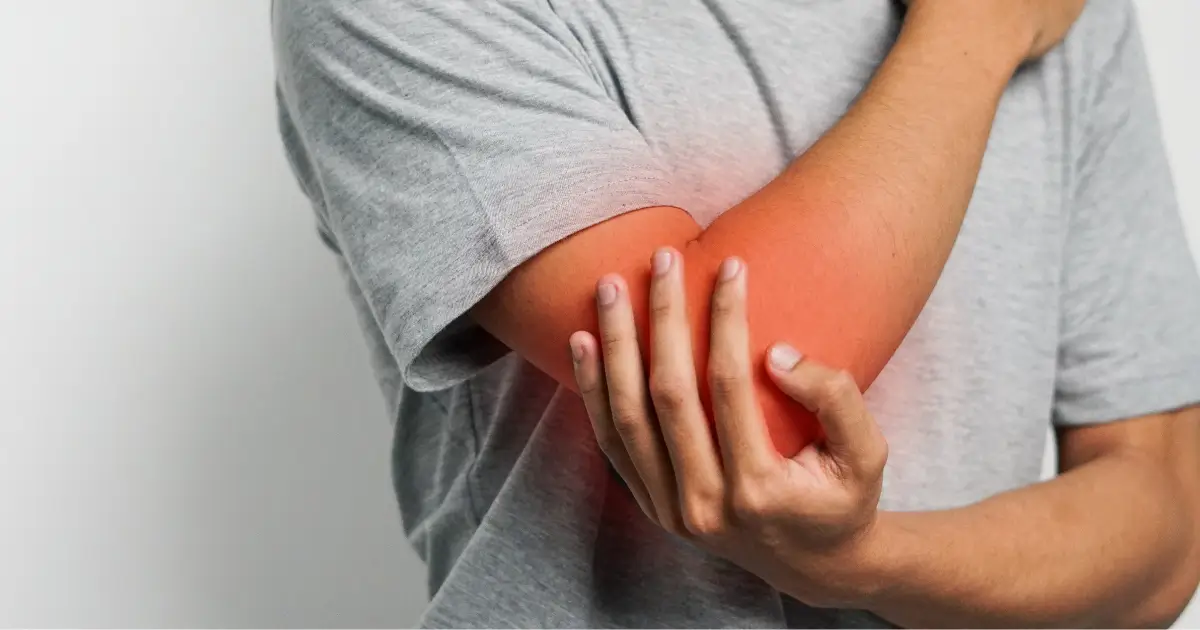
That nagging ache on the outer side of your elbow. The one that flares up when you pour a kettle, grip a mug, shake someone’s hand, or swing your badminton racket. Maybe it started small and you figured it would go away on its own. But here you are, weeks or months later, and it’s still there.
You’re not alone. Tennis elbow is one of the most common elbow complaints we see at ONI Physio Fitness in Mont Kiara, KL, and it’s also one of the most mismanaged.
Most people end up doing the same thing: rest for a while, take some painkillers, maybe get a steroid injection. The pain settles. They go back to normal. Then a few months later, it’s back. Sometimes worse. Why? Because the root cause was never properly addressed.
At ONI Physio Fitness, we don’t just treat pain, but we fix the problem. This guide covers everything you need to know about tennis elbow: what it is, what causes it, how to know if you have it, and how a proper physiotherapy and active exercise approach can get you back to doing what you love.
What Is Tennis Elbow? (Lateral Epicondylitis)

Tennis elbow is the common name for a condition called lateral epicondylitis. It happens when the tendons connecting your forearm muscles to the bony bump on the outer side of your elbow get overloaded and start to break down.
The medical term sounds scary, but the basic idea is simple: too much repetitive stress on the tendons, not enough recovery. Over time, the tendon tissue gets damaged and stops healing properly on its own.
Despite its name, playing tennis accounts for less than 5% of cases. Most people who get tennis elbow have never picked up a racket in their life. It’s much more common in people who do repetitive gripping or wrist movements at work, at the gym, or in their daily hobbies.
Causes of Tennis Elbow and Why KL Life Puts You at Risk
Tennis elbow is caused by repetitive overloading of the forearm extensor muscles and their tendons. In Kuala Lumpur, there are quite a few everyday activities that can quietly build up that load over time, often without people realising it.
Common causes among KL residents
- Badminton and racket sports. Badminton is hugely popular in KL, and the repeated gripping, wrist snapping, and smashing motions put a lot of stress on the outer elbow tendons.
- Long hours at a desk or laptop. Typing and using a mouse for hours on end keeps your forearm extensors in a sustained low-level contraction all day — a slow burn that adds up.
- Golf. The swing places significant stress on the forearm, especially when players have poor technique or suddenly increase their game frequency.
- Manual work and trades. Plumbers, carpenters, F&B workers, and anyone doing repeated gripping, wringing, or turning movements throughout the day.
- Gym training. Barbell rows, deadlifts, pull-ups, and grip-heavy exercises — especially when training load increases too quickly.
- Cooking and kitchen tasks. Repetitive chopping, stirring, and squeezing are surprisingly common triggers, particularly in the 40-55 age group.
Risk factors that make tennis elbow more likely
- Being between 35 and 55 years old (tendons naturally become less resilient with age)
- Weak forearm or shoulder muscles
- Poor workstation setup or keyboard and mouse ergonomics
- Jumping into a new sport or gym programme too quickly
- Previous elbow injury
- Smoking (slows tendon healing)
- Metabolic conditions like diabetes or high cholesterol
Tennis Elbow Symptoms: What Does It Actually Feel Like?
Symptoms usually come on gradually. You might brush off the first few twinges, but over time they tend to get harder to ignore.
Here’s what to look out for:
- Pain or tenderness on the outer side of the elbow, especially on or just below the bony bump
- A burning or aching feeling that can spread into the forearm
- Weak grip — struggling to carry shopping bags, open jars, or hold a coffee cup firmly
- Pain when lifting or gripping, especially with the palm facing down
- Stiffness in the morning or after a long period of rest
- Pain that gets worse with repeated forearm or wrist movements
The pain is usually worse during or just after activity, but in more severe cases it can linger for hours or even be present at rest.
When to seek help sooner
If you have numbness or tingling running down the arm, constant pain even at rest, or visible swelling and bruising around the elbow, don’t wait. These symptoms can point to a more complex problem, such like nerve compression or a partial tendon tear, and it needs a proper assessment as soon as possible.
Tennis Elbow Diagnosis: How We Know What We're Dealing With
Tennis elbow is diagnosed clinically, which means a skilled physiotherapist can identify it through a structured physical assessment without needing imaging in most cases.
What our assessment involves
At ONI, our initial assessment goes beyond just prodding the sore spot. We look at the full picture:
- Provocation tests (such as Cozen’s test and Mill’s test) to confirm lateral tendon involvement
- Grip strength measurement using a dynamometer, to gauge functional impairment
- Palpation of the lateral epicondyle and surrounding structures to pinpoint the exact location of the problem
- Cervical spine screening — neck problems can refer pain into the elbow and are frequently missed
- Shoulder and wrist assessment to identify any contributing weaknesses or stiffness higher or lower in the chain
Understanding the full picture, not just the elbow, but also what allows us to build a treatment plan that actually fixes the problem rather than just managing symptoms.
What about X-rays and scans?
An X-ray is usually normal with tennis elbow, but can rule out bony issues. Ultrasound or MRI can show tendon thickening or partial tears. At ONI, we use clinical assessment to guide treatment and refer for imaging when there’s a specific clinical reason to do so — not routinely.
If you have numbness or tingling running down the arm, constant pain even at rest, or visible swelling and bruising around the elbow, don’t wait. These symptoms can point to a more complex problem, such like nerve compression or a partial tendon tear, and it needs a proper assessment as soon as possible.
Simple Self-Assessment Guide: Could This Be Tennis Elbow?
- Pain or tenderness on the outer side of your elbow
- Pain when gripping objects like a mug, bag, or phone
- Pain when lifting with your palm facing down
- Forearm feels weak or fatigues quickly
- Symptoms are worse after repetitive forearm activities
- Symptoms have persisted for longer than two weeks
Disclaimer
This checklist is for educational purposes only and is not a substitute for a proper clinical diagnosis. Many elbow and forearm conditions share overlapping symptoms. If you ticked three or more boxes, or if your symptoms are worsening, please book an assessment with one of our physiotherapists at ONI Physio Fitness in Mont Kiara, KL.
Tennis Elbow Treatment Options in Kuala Lumpur
There are quite a few different treatment options available for tennis elbow in KL. Here’s a plain-language overview so you can understand what each one does and where it fits:
Treatment | What it does | Best suited for |
Physiotherapy | Targeted exercise, manual therapy, load management, education | Most presentations; strongest long-term evidence |
Corticosteroid injection | Reduces pain and inflammation in the short term | Acute flare-ups — but high recurrence rates; does not fix the tendon |
Shockwave therapy (ESWT) | Stimulates the body’s natural healing response in the tendon | Chronic or stubborn cases that haven’t responded to exercise alone |
PRP injection | Uses your own blood’s growth factors to support tendon repair | Partial tears or cases that failed conservative treatment |
Elbow strap / brace | Offloads the tendon during activity to reduce strain | Symptom management while continuing rehabilitation |
Surgery | Removes degenerated tendon tissue | Last resort after 6 to 12 months of failed conservative management |
What the evidence says
High-quality research consistently shows that progressive strengthening exercises — particularly eccentric and isometric loading — produce better long-term outcomes than corticosteroid injections. Injections can provide faster short-term relief, but they have significantly higher recurrence rates at 12 months. Exercise-based physiotherapy takes more commitment but builds the durable recovery that actually sticks.
Why the ONI Physio Fitness Approach Gets Better Results
Many physiotherapy clinics in KL follow a fairly passive model: ultrasound, heat, some massage, a few generic exercises, and see you next week. Patients feel better for a while, go back to the activity that caused the problem, and then come back with the same injury months later.
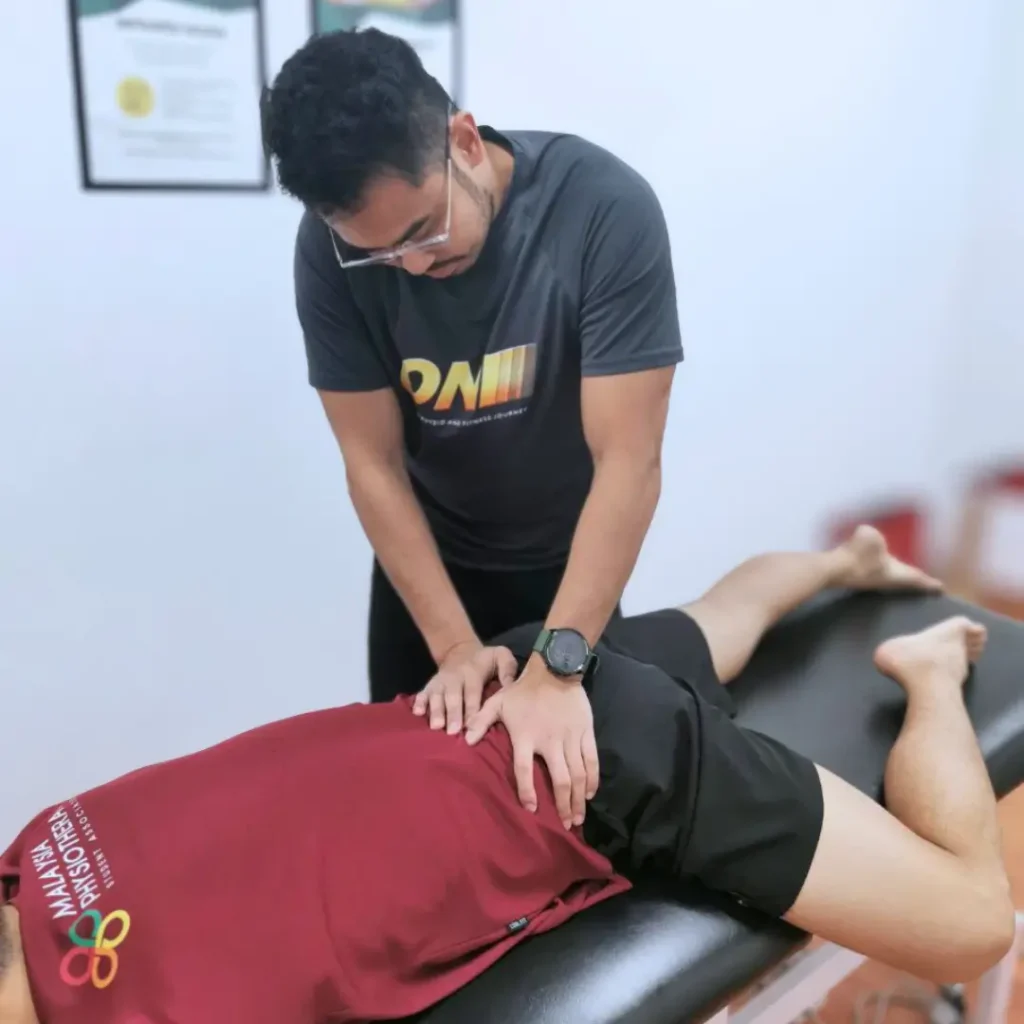
At ONI, we take a different approach. We combine hands-on physiotherapy with structured active exercise therapy. It is because we know from both research and clinical experience that this is what produces lasting results.
Pain relief is not the finish line. It’s the starting point. Our goal is to get you back to the things you love: badminton, golf, the gym, your job — stronger than you were before.
What makes us different
We assess the full picture. Not just the elbow. We look at your neck, shoulder, wrist, and how you move overall — because contributing factors higher or lower in the chain are often missed elsewhere.
- We use progressive tendon loading. Evidence-based isometric and eccentric exercise protocols that stimulate actual tendon repair and adaptation — not just pain masking.
- We prioritise strength over symptom management. Stronger tendons and muscles are the best long-term protection against recurrence. We build them.
- We tailor rehab to your life. Whether you play badminton at a court in Bangsar, work a 10-hour desk job in KLCC, or train at a gym in Mont Kiara, your programme reflects the actual demands of your day.
- We educate as we treat. We’ll teach you what’s happening in your tendon, how to manage your load, and how to spot early warning signs before they turn into an injury — so you can stay on top of things independently
- Manual therapy supports the exercise. We use hands-on techniques to reduce pain and improve mobility so that you can exercise effectively — not as an end goal in itself.
Treatment Modalities for Tennis Elbow at Our Elbow Pain Clinic in Kuala Lumpur
Depending on your specific presentation, your physiotherapist at ONI may use a combination of the following:
What makes us different
Modality | What it does | When we use it |
Isometric wrist extension exercises | Provides immediate pain relief and starts stimulating the tendon gently | Phase 1 (early) |
Eccentric forearm strengthening | The core of tendon rehab — stimulates collagen remodelling and builds tendon capacity | Phase 2 onwards |
Soft tissue therapy and myofascial release | Reduces muscle tension in the forearm and improves tissue flexibility | Phase 1-2 |
Joint mobilisation (elbow, wrist, cervical) | Restores joint mechanics and reduces pain sensitivity | Phase 1-2 |
Dry needling | Addresses trigger points and myofascial pain in the forearm extensor muscles | Phase 1 |
Shockwave therapy (ESWT) | Stimulates healing in chronic or persistent tendon conditions | Chronic cases |
Taping and bracing guidance | Offloads the tendon during activity and supports return to work or sport | Phase 1-2 |
Progressive resistance training | Restores full upper limb and grip strength | Phase 2-3 |
Sport-specific and activity drills | Replicates the demands of your sport or job to ensure you return safely | Phase 3 |
Ergonomic and load management advice | Modifies contributing factors in your work, sport, or daily habits | All phases |
Your Rehabilitation Journey: A Clear Timeline
Recovery from tennis elbow is not a straight line, but a well-structured programme follows a clear progression. Here’s what you can expect when you work with us:
Phase 1 Weeks 1-2 | Pain control and initial loading This is about getting the pain under control and starting to stimulate the tendon in a gentle, controlled way. • Full assessment and diagnosis • Isometric exercises to begin reducing pain and loading the tendon • Soft tissue therapy and joint mobilisation • Activity modification advice • Ergonomic review if your work is contributing • Typical pain reduction by end of Phase 1: 30-50% |
Phase 2 Weeks 3-6 | Progressive tendon loading This is the most important phase. We progressively increase the demand on the tendon to stimulate proper healing and tissue adaptation. • Transition to eccentric and slow heavy resistance exercises • Progressive load increases guided by your symptom response • Grip and wrist strengthening introduced • Gradual return to low-load daily activities • Continued manual therapy as needed |
Phase 3 Weeks 6-12 | Functional strengthening The tendon is now stronger. We focus on building full upper limb capacity and preparing you to return to your sport or occupation. • Energy storage and release exercises (important for racket sports and gym) • Sport-specific progressions begin • Full upper limb strength and conditioning • Return to modified work or sport tasks • Goal: pain-free function in all daily activities |
Phase 4 Weeks 12-16+ | Full return to activity You’re back. The goal now is to make sure you stay that way. • Full return to badminton, golf, gym, or work tasks with structured load management • Maintenance programme to keep tendon health long-term • Education on how to recognise early warning signs • Discharge with a self-management plan |
A note on chronic tennis elbow
If your symptoms have been going on for more than 6 months, expect a longer recovery journey — typically 4 to 6 months of structured physiotherapy. The most important factor is consistent adherence to progressive loading exercises. Skipping sessions or rushing back to heavy activity too soon are the main reasons for relapse.
Tennis Elbow Self-Help Exercises You Can Start Today
These exercises are based on the best available evidence for tennis elbow rehabilitation. They’re safe to start at home and can make a meaningful difference alongside your physiotherapy treatment.
Important: a mild discomfort of 3 to 4 out of 10 during exercise is normal and acceptable. Sharp pain, worsening pain, or pain that stays elevated for more than 24 hours after exercise means you’ve done too much, try to ease back.
Exercise 1: Wrist extensor isometric hold
Sit with your forearm resting on a table, palm facing down. Place your other hand on top and gently press down while the bottom hand resists. Nothing should move. Hold for 45 seconds. Rest for 1 minute. Repeat 5 times. Do this 2 to 3 times daily — it’s one of the best ways to reduce pain quickly.
Exercise 2: Eccentric wrist extension (slow lowering)
Hold a light dumbbell or resistance band with your elbow resting on your knee, palm facing up. Use both hands to raise the weight into wrist extension, then slowly lower it using the affected hand only, over 3 seconds.
Exercise 3: Wrist extensor stretch
Extend your affected arm out in front with the elbow straight and palm facing down. Use the other hand to gently bend the wrist downward until you feel a mild stretch across the top of the forearm. Hold for 30 seconds. Three repetitions, three times daily. Don’t force it — gentle and consistent is the goal.
Exercise 4: Forearm rotation with weight
Hold a light hammer or dumbbell upright, with your elbow at your side. Slowly rotate your forearm palm up, then palm down. Three sets of 15 reps. This is particularly important for badminton players and anyone whose activity involves rotational forearm movements.
Exercise 5: Grip strengthening
Squeeze a stress ball or therapy putty 30 times per set, three sets daily. Simple, easy to do anywhere, and an important part of restoring grip strength and overall tendon function.
Self-exercise disclaimer
These exercises are general in nature and may not suit every presentation of elbow pain. If your symptoms worsen or don’t improve after 2 to 3 weeks of consistent self-management, please book an assessment at ONI Physio Fitness. A tailored, supervised programme will always produce better results than a generic home routine.
How to Prevent Tennis Elbow — Tips for KL Residents
The best treatment is the one you never need. Here’s how to reduce your risk, whether you’re active in sport or spend most of your day at a desk
For badminton, squash, and racket sport players
Check your grip size. When a grip that’s too small or too large, it puts extra load on the forearm tendons
- Warm up your forearms and wrists before play, not just your shoulder
- Ease into higher training volumes rather than jumping straight into intensive sessions
- Include regular forearm and wrist strengthening in your weekly routine
- Consider reducing string tension if you play recreationally — it reduces shock transmission
For office workers and remote workers in KL
Set up your workstation so your wrists are in a neutral position when typing — not bent up or down
- Use a vertical or ergonomic mouse if you’re at a computer for more than 4 hours a day
- Take short forearm stretch breaks every 45 to 60 minutes — set a reminder if you need to
- Avoid cradling your phone between your ear and shoulder for extended periods
For gym-goers and fitness enthusiasts
- Progress training load gradually — the general guideline is no more than a 10% increase in weekly volume
- Include dedicated wrist extensor and flexor strengthening in your programme — most gym programmes completely neglect the forearm
- Address any shoulder weakness, since a weak shoulder girdle shifts excess stress down to the elbow
Ready to Sort Your Elbow Out, Once and For All?
If you’ve been putting up with elbow pain, relying on rest and painkillers, or bouncing between treatments without lasting results, it’s time to try a different approach.
At ONI Physio Fitness in Mont Kiara, KL, we combine hands-on physiotherapy with evidence-based active exercise therapy to treat the cause of your tennis elbow, not just the symptoms. We’ll give you a clear diagnosis, a realistic timeline, and a program that builds the strength and resilience you need to stay well long-term.
Disclaimer
This blog post is written for educational purposes and does not constitute medical advice. Individual results vary. Always consult a qualified healthcare professional for assessment and treatment of your specific condition. Pricing is indicative and subject to change — please contact ONI Physio Fitness directly for current rates and availability.